
Core Types of Gambling
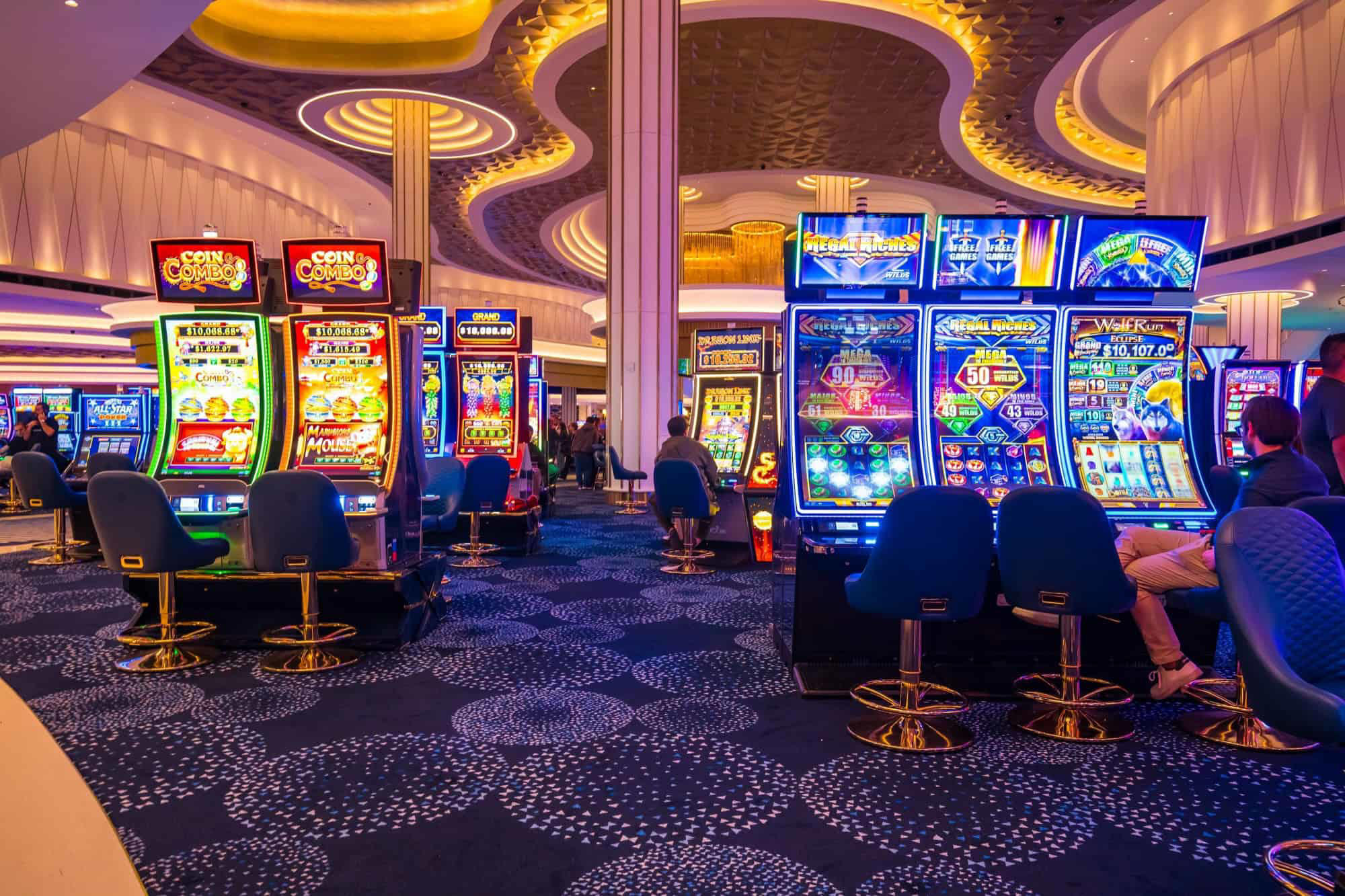
Gambling activities fall into four main categories based on how they work and where they take place. Casino gaming involves both luck-based and skill-based games, sports betting lets people wager on athletic competitions, lotteries offer large jackpots for small ticket prices, and specialty games provide quick results through instant win formats.
Casino Gaming
Casino games split into two distinct groups based on whether luck or skill determines the outcome.
Games of pure chance include slots, roulette, and baccarat. Slot machines use random number generators to produce results, making each spin completely independent. Players simply press a button and wait to see if symbols match. Roulette involves betting on where a ball will land on a spinning wheel, with no way to influence the result.
Skill-based games give players some control over outcomes. Blackjack requires players to make strategic decisions about when to hit, stand, split, or double down. Basic strategy charts can reduce the house edge significantly. Poker stands out as the primary skill game where players compete against each other rather than the house. Success depends on understanding odds, reading opponents, and making calculated decisions.
Most Common Casino Games:
- Slots
- Blackjack
- Roulette
- Poker
- Baccarat
- Craps
These games appear in physical casinos and online platforms. Live dealer versions stream real dealers in real time, combining the convenience of online play with an authentic casino atmosphere.
Sports Betting
Sports betting allows people to wager money on the outcomes of athletic events. Bettors need knowledge of teams, players, and game conditions to make informed decisions.
The three main bet types serve different purposes. Moneyline bets are straightforward wagers on which team will win. Point spread bets account for skill differences between teams by giving the underdog a head start. Over/under bets focus on the total points scored by both teams combined, not who wins.
Parlay bets combine multiple wagers into one ticket. All selections must win for the bet to pay out, but the potential returns are much higher than single bets. This higher reward comes with increased risk.
Popular Sports for Betting:
- Football
- Basketball
- Baseball
- Soccer
- Hockey
- Tennis
Successful sports betting requires bankroll management. Betting small, consistent amounts helps weather inevitable losses better than placing large wagers on single games.
Lotteries and Lottery Games
Lotteries sell numbered tickets and award prizes through random drawings. Players select numbers and win based on how many match the drawn numbers.
Multi-state lotteries like Powerball and Mega Millions offer jackpots that can reach hundreds of millions of dollars. The odds of winning major prizes are extremely low, but ticket prices stay affordable at a few dollars each. Smaller prizes with better odds are also available for matching fewer numbers.
Scratch-off tickets provide instant results. Players scratch a coating off the ticket to reveal whether they won. These games cost anywhere from one dollar to twenty dollars or more, with prize amounts varying by ticket price.
Local and charity raffles operate similarly but on a smaller scale. Organizations sell numbered tickets and draw winners for specific prizes.
Specialty and Instant Win Games
Specialty gambling games fill the space between major casino games and lotteries. These options appeal to players who want simpler, more social experiences.
Bingo involves marking numbers on a card as they are called out. The first player to complete a specific pattern wins. Bingo halls create social environments where regular players form communities. Online bingo offers the same gameplay with chat features connecting players.
Keno works like a faster lottery. Players select numbers from a large grid, and the game draws winning numbers within minutes. More matches mean bigger payouts. Casinos often run keno continuously throughout the day.
Key Differences:
| Game | Speed | Social Element | Complexity |
|---|---|---|---|
| Bingo | Moderate | High | Low |
| Keno | Fast | Low | Low |
Both games require no skill and operate entirely on chance. The low stakes and simple rules make them accessible entry points for new gamblers.
Casino Table Games
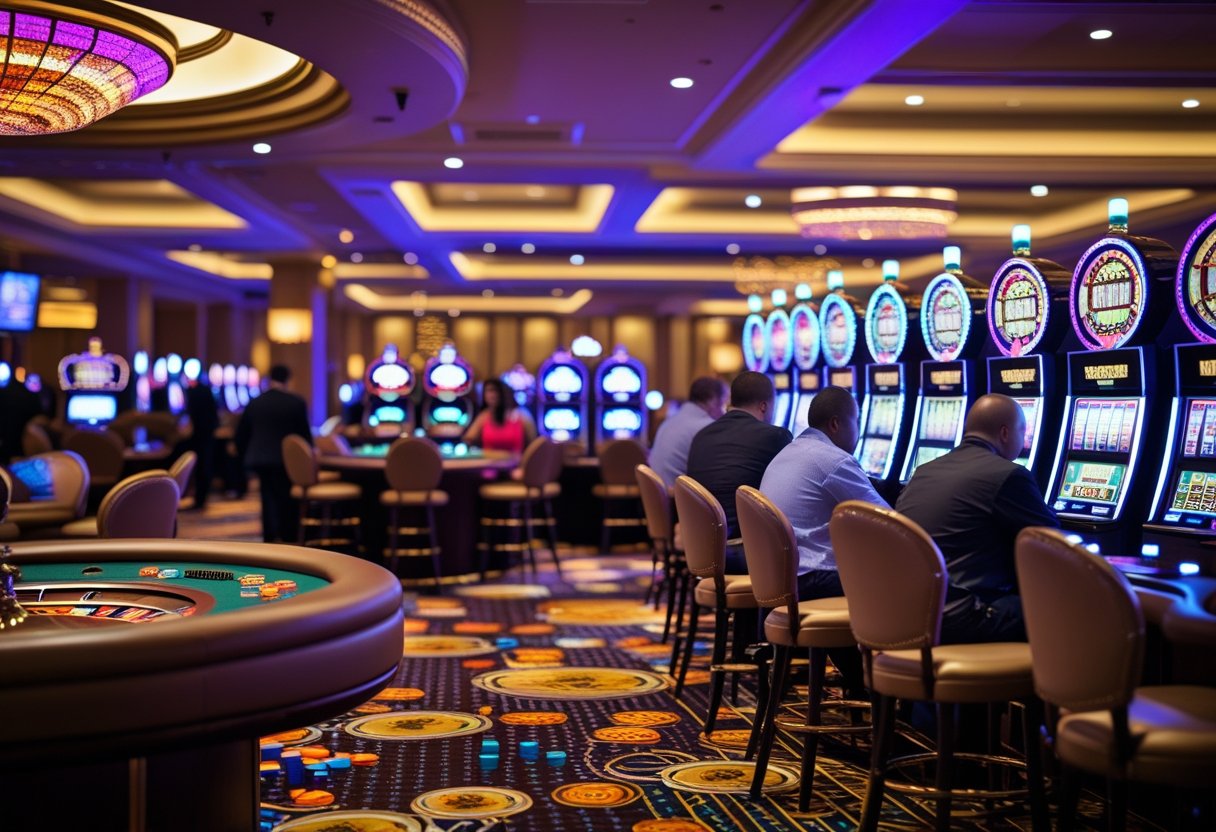
Table games combine skill, strategy, and chance in ways that slot machines and other casino offerings cannot match. Players interact directly with dealers or other players at physical tables, whether they choose card games like poker and blackjack or wheel-based games like roulette and baccarat.
Poker Variants
Texas Hold’em stands as the most recognized poker variant worldwide. Each player receives two private cards and shares five community cards with others at the table. Players make the best five-card hand possible from these seven total cards.
Three-Card Poker offers a faster-paced alternative where players compete against the dealer rather than each other. The game requires an “Ante” bet, and players decide whether to fold or continue after seeing their three cards. The dealer must qualify with a Queen high or better.
Caribbean Stud Poker involves a five-card hand against the dealer’s hand. Players cannot exchange cards, and the dealer must qualify with an Ace-King combination or higher. This variant includes optional progressive jackpot side bets.
Pai Gow Poker merges Chinese dominoes with American poker rules. Players receive seven cards and must create two hands: a five-card “high” hand and a two-card “low” hand. Both hands must beat the dealer’s corresponding hands to win.
Blackjack Fundamentals
The objective in blackjack is to beat the dealer by getting a hand value closer to 21 without exceeding it. Number cards count at face value, face cards equal 10, and Aces count as either 1 or 11.
Players start with two cards and can choose to “hit” for additional cards or “stand” with their current total. Other options include “splitting” identical cards into two separate hands or “doubling down” to double the bet in exchange for receiving exactly one more card.
The dealer must follow fixed rules, typically hitting on 16 or less and standing on 17 or higher. Players win when their hand exceeds the dealer’s without busting, or when the dealer busts. A “blackjack” (an Ace plus a 10-value card) pays 3:2 in most casinos.
Basic strategy charts show mathematically optimal plays for every possible hand combination. Following these recommendations reduces the house edge to approximately 0.5%, making blackjack one of the most favorable table games for players.
Roulette Options
The roulette wheel contains numbered pockets where a small ball lands after spinning. European roulette features 37 pockets (numbers 1-36 plus a single zero), while American roulette adds a double zero for 38 total pockets.
Players place chips on a betting layout that corresponds to wheel numbers. Inside bets cover specific numbers or small groups, offering higher payouts but lower odds. Outside bets include red/black, odd/even, and high/low options with nearly 50% winning probability.
Common bets include:
- Straight up: Single number (pays 35:1)
- Split: Two adjacent numbers (pays 17:1)
- Street: Three numbers in a row (pays 11:1)
- Corner: Four numbers meeting at a corner (pays 8:1)
- Dozen: 12 numbers (pays 2:1)
European roulette provides better odds than the American version because the single zero gives the house an edge of 2.7% versus 5.26%. Some casinos offer French roulette with “La Partage” or “En Prison” rules that further reduce the house advantage on even-money bets.
Baccarat and Alternatives
Baccarat involves betting on which hand will total closest to 9: the Player hand, the Banker hand, or a Tie. Players do not control the cards; the dealer handles all dealing according to fixed rules.
Cards 2-9 count at face value, while 10s and face cards equal zero. Aces count as one. When hand totals exceed 9, only the second digit counts (a 7 and 8 equals 15, valued as 5).
The Banker bet carries a house edge of 1.06%, making it the most favorable option. Player bets have a 1.24% house edge. Tie bets offer 8:1 payouts but carry a 14.4% house edge.
Mini-Baccarat uses the same rules but accommodates more players at a smaller table with lower minimum bets. Games move faster because one dealer handles all card distribution, whereas traditional baccarat tables may involve multiple dealers and ceremonial card handling.
Chemin de Fer represents a European variant where players take turns being the banker. This version requires more skill because the acting banker makes decisions about drawing a third card rather than following automatic rules.
Slot Machines and Online Slots
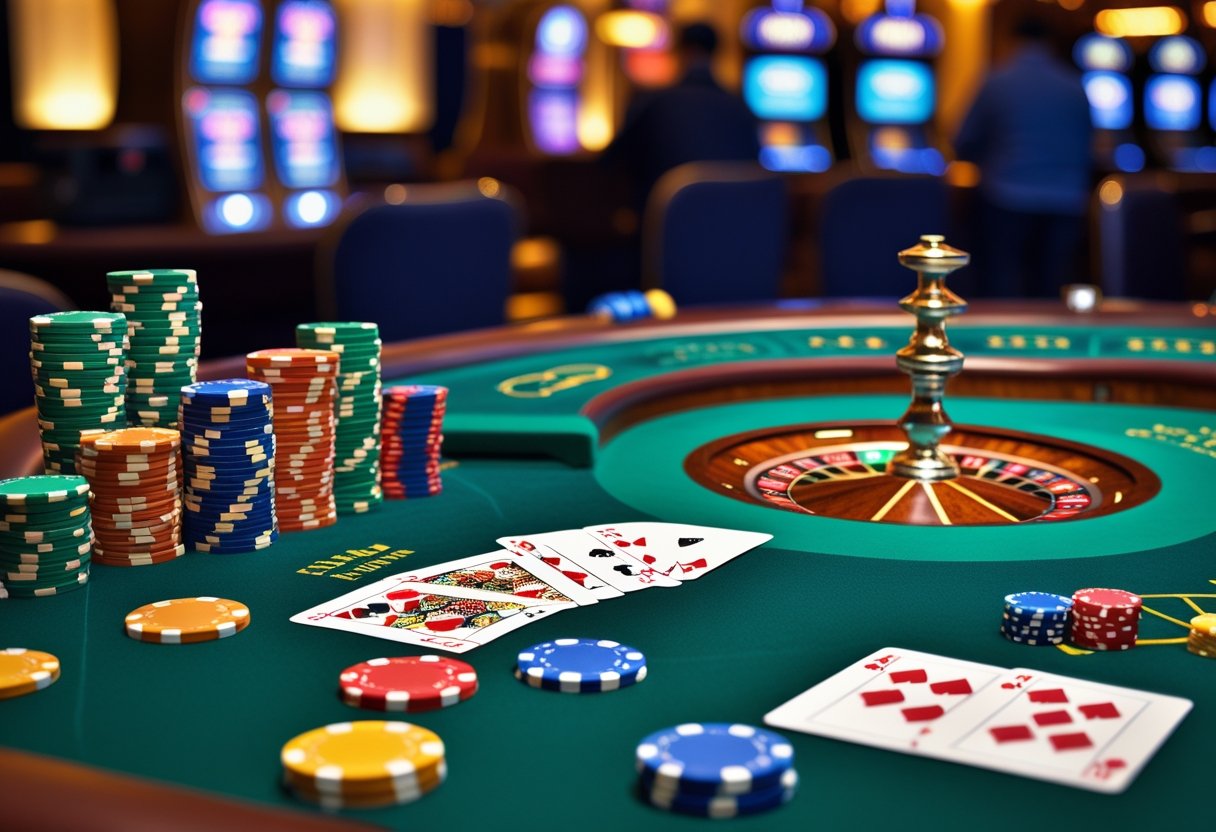
Slot machines rank among the most popular casino games both in physical casinos and online platforms. These games range from simple three-reel classics to complex video slots with multiple bonus features, all powered by random number generators that ensure fair outcomes.
Classic Slots
Classic slots replicate the traditional slot machines found in older casinos. These games typically feature three reels and a limited number of paylines, usually between one and five. The symbols often include fruits, bars, sevens, and bells.
Players appreciate classic slots for their straightforward gameplay. There are no complicated rules or bonus rounds to learn. Each spin works the same way: the player places a bet, spins the reels, and wins if matching symbols line up on active paylines.
Random number generators determine every spin result in both physical and online versions. This technology ensures that each spin is independent and fair. Classic slots generally offer lower maximum payouts compared to modern alternatives, but they also tend to have less volatile gameplay with more frequent small wins.
Video Slots
Video slots use digital screens instead of physical reels. These games typically feature five reels and offer anywhere from 10 to hundreds of paylines. Some modern video slots use special mechanics like Megaways, which can create over 100,000 ways to win on a single spin.
The graphics and animations in video slots are more advanced than classic versions. Many games include themes based on movies, TV shows, mythology, or original stories. Sound effects and music enhance the gaming experience.
RNG technology powers all video slots, generating results that cannot be predicted or manipulated. The random number generator runs continuously, producing thousands of number sequences per second. When a player hits the spin button, the RNG stops at a specific sequence that determines which symbols appear.
Video slots usually include special symbols like wilds and scatters. Wild symbols substitute for other symbols to create winning combinations. Scatter symbols often trigger bonus features or free spins.
Progressive Jackpot Slots
Progressive jackpot slots feature prizes that grow over time. A small percentage of each bet placed by any player contributes to the jackpot pool. These jackpots can reach millions of dollars before someone wins.
Two main types exist: standalone progressives and networked progressives. Standalone progressives build from bets on a single machine. Networked progressives link multiple machines or online slots across different casinos, allowing jackpots to grow much faster and larger.
Players usually must bet the maximum amount to qualify for the top progressive jackpot. Some games offer multiple progressive levels, such as mini, minor, major, and grand jackpots. Each level has different winning conditions and prize amounts.
The trade-off for massive jackpot potential is typically lower RTP (Return to Player) percentages. While standard slots might return 95-97% of wagers over time, progressive slots often return 88-92% because a portion funds the growing jackpot.
Bonus Features in Slots
Bonus rounds add extra gameplay elements beyond standard spinning. Free spins are the most common bonus feature. Players receive a set number of spins without paying, and winnings from these spins are added to their balance. Free spin bonuses often include multipliers that increase prizes.
Pick-and-click games present players with multiple options to choose from, revealing instant prizes. Wheel of fortune bonuses spin a prize wheel to determine rewards. Some slots include mini-games that play like arcade-style challenges.
Bonus buy features let players purchase direct access to bonus rounds instead of waiting to trigger them naturally. This option costs significantly more than a standard spin but guarantees entry to the bonus game.
Random number generators also control bonus features, determining both when they trigger and what prizes they award. Modern online slots may include cascading reels, expanding wilds, or sticky symbols that remain in place for multiple spins. These features increase winning potential and add variety to gameplay.
Specialty Casino Games
Specialty casino games include bingo, keno, scratch cards, and wheel-based games that don’t fit into traditional slots or table game categories. These games typically feature simpler rules and faster gameplay than classic casino offerings.
Bingo Basics
Bingo operates on a straightforward concept where players mark numbers on cards as they’re called out randomly. Each card contains a grid of numbers, usually in a 5×5 format with 24 numbers and one free space in the center. Players win by completing specific patterns like straight lines, diagonals, or full cards.
Online bingo offers several variations with different card sizes and winning patterns. The most common formats include 75-ball bingo (popular in North America) and 90-ball bingo (preferred in the UK and Europe). Games move quickly, with rounds typically lasting just a few minutes.
Players can purchase multiple cards per game to increase their winning chances. The cost per card varies by casino and game room, ranging from a few cents to several dollars.
Keno Explained
Keno resembles a lottery-style game where players select numbers from a board typically containing 80 numbers. After making their selections, the game draws 20 random numbers. Players win based on how many of their chosen numbers match the drawn numbers.
The game allows flexibility in how many numbers players pick, usually between 1 and 20 selections. Payouts increase with more matches, but the odds of hitting all selected numbers decrease as more numbers are chosen. A typical strategy involves selecting between 4 and 8 numbers for balanced odds and payouts.
Each casino sets its own payout structure for keno games. Players should review the pay table before playing to understand potential returns for different match combinations.
Scratch Cards
Scratch cards provide instant-win entertainment where players reveal hidden symbols or numbers by virtually “scratching” designated areas. Digital versions work with mouse clicks or screen taps instead of physical scratching. The goal is matching specific symbols, numbers, or patterns shown in the game rules.
Online scratch cards come in numerous themes and price points, from 25 cents to $10 or more per card. Games display their top prizes and odds clearly before purchase. Most scratch cards offer straightforward gameplay that takes seconds to complete.
The return-to-player percentages for scratch cards vary significantly between games. Players can find this information in the game rules or help section.
Wheel of Fortune and Game Shows
Wheel-based games and casino game shows bring television-style entertainment to online gambling. Players bet on where a spinning wheel will stop, with different segments offering various multipliers or prizes. The wheel contains colored or numbered sections, each with specific payout values.
Game show formats incorporate bonus rounds, live hosts, and interactive features. Popular examples include wheels with multipliers ranging from 1x to 50x or higher. Some versions add bonus games triggered by landing on special wheel segments.
These games typically feature higher production values than standard casino games. Live dealer versions include real hosts spinning physical wheels in studio settings, creating an immersive experience similar to television game shows.
Emerging and Modern Gambling Games
New types of casino games have appeared in recent years that differ from traditional options. These games often feature faster gameplay, simpler rules, and interactive elements that appeal to modern players.
Crash Games
Crash games center on a multiplier that rises from 1x upward until it suddenly crashes at a random point. Players place a bet and must cash out before the crash happens to secure their winnings. The longer they wait, the higher the potential payout, but also the greater the risk of losing everything.
Popular titles include Aviator, JetX, and Spaceman. Each uses different visual themes but follows the same core mechanic. Some versions allow multiple bets per round or include chat features for social interaction.
The game format is pure chance, but players control when to cash out. This creates a sense of involvement even though the crash point is predetermined by an algorithm. Rounds typically last between 5 and 30 seconds, making crash games one of the fastest gambling options available.
Plinko and Mines
Plinko recreates the classic board game where a ball drops through pegs and lands in prize slots at the bottom. Players can often adjust settings like the number of rows or risk level, which changes potential payouts. The ball’s path is random, but the visual journey adds entertainment value. Some versions offer RTP rates up to 99%.
Mines games work like digital Minesweeper. Players click tiles on a grid to reveal safe spots while avoiding hidden mines. Each successful pick increases the multiplier. Players can cash out at any point or continue clicking for higher rewards.
Both game types let players customize their risk. More mines or higher volatility settings in Plinko lead to bigger potential wins but lower chances of success. These games take seconds to complete and require no learning curve.
Virtual Sports
Virtual sports use computer simulations to recreate sporting events like horse racing, football, greyhound racing, and basketball. Events run continuously on short loops, typically every few minutes. Graphics simulate real match conditions and commentary.
Players bet on outcomes the same way they would for real sports, but results come from random number generators rather than actual competition. This means events never pause for off-seasons or scheduling gaps. Betting markets include match winners, over/under totals, and specific player performances.
Virtual sports appeal to bettors who want the sports betting experience without waiting for real games. The quick turnaround between events creates continuous action. However, since outcomes are computer-generated, no research or sports knowledge provides an actual advantage.
Mini-Games
Mini-games is a broad category covering simple gambling games that don’t fit traditional formats. These include scratch cards, coin pushers, dice games, and casual arcade-style titles. Many use familiar gameplay from non-gambling games but add wagering mechanics.
Common examples are number guessing games, Hi-Lo card predictions, and wheel spinners. They typically feature instant results and low betting minimums. Scratch cards remain especially popular, offering themed variations with different prize structures.
Slingo combines slot machine spins with bingo card marking. Players spin reels to match numbers on a grid and complete lines for prizes. Wild symbols add a small strategic element to an otherwise luck-based game.
These games prioritize accessibility over complexity. Most can be understood within seconds and played on mobile devices. They fill the casual gaming space in online casinos.
Online and Live Casino Games
Online casinos provide two main ways to play: digital games that run on random number generators and live dealer games that stream real-time action from studios. Both formats offer distinct advantages in terms of pace, social interaction, and game selection.
Online Casino Experiences
Online casino games use random number generator software to create outcomes instantly. Players access these games solo and control the pace of play completely.
Slot machines dominate online casinos with thousands of titles available. They range from classic three-reel games to modern video slots with bonus rounds, multipliers, and progressive jackpots. Megaways slots and cluster pay formats add variety to traditional payline structures.
Virtual table games include digital versions of blackjack, roulette, baccarat, and craps. These games let players practice strategies without time pressure or interact with others. The software shuffles cards and spins wheels instantly between rounds.
Instant win games cover scratch cards, Plinko, mine games, and arcade-style titles. These games deliver quick results and simple gameplay. Crash games like Aviator have gained popularity with their rising multipliers that can end at any moment.
Most online games work on desktop computers and mobile devices. Players can switch between games quickly and often find hundreds or thousands of options at major casino sites.
Live Dealer Games
Live dealer games stream professional dealers from studios directly to player screens. Real cards, dice, and wheels replace computer-generated results.
Blackjack and baccarat are the most common live dealer games. Dealers handle physical cards while players make decisions through an on-screen interface. Multiple players can join the same table and see each other’s bets.
Roulette features real spinning wheels with high-definition cameras capturing every angle. European, American, and French variants are typically available with different table limits.
Live dealer games run on set schedules with actual dealing times. Players must make decisions within time limits, usually 15-30 seconds per round. This creates a more authentic casino atmosphere than instant digital games.
Live Casino Games
Live casino games extend beyond basic table games to include game shows and specialty formats. Evolution Gaming, Pragmatic Play, and Playtech produce most live casino content.
Game show formats like Crazy Time and Monopoly Live combine wheel spins with bonus rounds and multipliers. These games blend entertainment elements with gambling mechanics and feature hosts who interact with players through chat.
Lightning variations add random multipliers to traditional games. Lightning Roulette, Lightning Blackjack, and Lightning Baccarat offer higher payouts on selected outcomes each round.
Live casinos also offer poker variants, craps, Sic Bo, and money wheels. Some platforms include first-person modes that switch between computer-generated action and live dealers. Players can chat with dealers and other participants in real-time, creating social engagement that online RNG games cannot match.
Gambling Game Mechanisms and Strategy
Casino games rely on specific mechanisms to ensure fair play, while successful players use proven methods to manage their money. Understanding these core elements helps players make informed decisions at the table.
RNG in Casino Games
Random Number Generators (RNG) are the technology that powers modern casino games, particularly in online platforms. These complex algorithms generate thousands of number sequences per second to determine game outcomes. Each result is completely independent from the previous one, making it impossible to predict what will happen next.
Online slots, video poker, and digital versions of table games all depend on RNG technology. The software uses mathematical formulas to produce random results that mirror the odds of physical casino games. For example, a digital roulette wheel uses an RNG to determine where the ball lands, just as unpredictable as a real wheel.
Casinos must have their RNG systems tested and certified by independent agencies. These tests verify that the random number generator produces truly random results and hasn’t been programmed to favor the house beyond the stated odds. Players can check for certification seals from testing labs before choosing where to play.
Bankroll Management
Bankroll management is the practice of controlling how much money a player uses for gambling activities. This strategy involves setting clear limits on losses and sticking to predetermined betting amounts. Players should only gamble with money they can afford to lose, never using funds meant for bills or essential expenses.
A common approach divides the total bankroll into smaller session amounts. If a player has $500 for gambling, they might split it into five sessions of $100 each. This prevents losing everything in one sitting and extends playing time.
Bet sizing also matters for bankroll protection. Most experts recommend keeping individual bets between 1-5% of the total bankroll. A player with $200 should bet no more than $2-10 per hand or spin. This approach helps players weather losing streaks without depleting their funds too quickly.
Popular Lottery Titles
Powerball stands as one of the most recognized lottery games in the United States, drawing millions of players who hope to win life-changing jackpots through its twice-weekly drawings.
Powerball Overview
Powerball operates in 45 U.S. states, Washington D.C., Puerto Rico, and the U.S. Virgin Islands. Players select five numbers from 1 to 69 and one Powerball number from 1 to 26. Drawings occur every Monday, Wednesday, and Saturday at 10:59 PM Eastern Time.
The game costs $2 per play, with an optional Power Play feature for an additional $1 that multiplies non-jackpot prizes. The starting jackpot begins at $20 million and grows until someone wins. Players must match all six numbers to win the grand prize.
The odds of winning the jackpot are 1 in 292.2 million. However, there are nine total prize tiers, with odds of winning any prize at 1 in 24.9. Smaller prizes range from $4 for matching just the Powerball to $1 million for matching all five white balls without the Powerball.
Frequently Asked Questions
Casino games and gambling options vary widely across different venues and platforms. Players often need guidance on game selection, categorization systems, and the differences between various gambling formats.
What are the most popular casino games played in the United States?
Slot machines rank as the most played casino game in the United States. These games attract players because they require no skill and offer simple gameplay with potential for large payouts.
Blackjack stands as the most popular table game in American casinos. Players favor it because the house edge can be lowered through basic strategy. Roulette, craps, and baccarat also draw significant crowds at casino floors.
Video poker machines combine elements of slots and traditional poker. They appeal to players who want a game that involves some decision-making. Poker rooms featuring Texas Hold’em tournaments also attract dedicated player bases at major casinos.
How are gambling games categorized in a casino setting?
Casinos divide games into table games, electronic gaming machines, and specialty games. Table games include blackjack, roulette, craps, and baccarat, where dealers manage the action. Electronic gaming machines cover slots, video poker, and electronic versions of table games.
The house edge serves as another way to categorize casino games. Games of pure chance like slots and roulette cannot be influenced by player decisions. Games of skill such as blackjack and poker allow players to affect outcomes through strategy and decision-making.
Casinos also group games by minimum bet requirements. High-limit areas feature tables with larger minimum bets for players with bigger bankrolls. Lower-stakes tables and penny slots accommodate players who prefer smaller wagers.
Can you list various forms of gambling besides casino games?
Sports betting allows people to wager on professional and college sports outcomes. Bettors can place money on game winners, point spreads, and individual player performances. Many states now permit legal sports betting through retail locations and mobile apps.
Lottery games operate in most U.S. states through government-run organizations. Players purchase tickets for drawing-based games like Powerball and Mega Millions. Scratch-off tickets provide instant results for smaller prize amounts.
Horse racing and greyhound racing offer pari-mutuel betting where players wager against each other rather than the house. Bingo halls provide another social gambling option where players mark numbers on cards. Daily fantasy sports contests let participants build virtual teams and compete for cash prizes based on real athlete performances.
What are the main differences between land-based and online casino gaming?
Land-based casinos require physical presence at a brick-and-mortar location. Players experience the atmosphere of a casino floor with sounds, social interaction, and complimentary services. Online casinos operate through websites and mobile apps accessible from any location with internet access.
Game variety typically exceeds at online casinos because digital platforms face no space limitations. A single online casino might offer hundreds or thousands of slot titles. Physical casinos must limit their game selection based on available floor space.
Online casinos allow players to set their own pace and play at any time of day. Table games at physical casinos require players to wait for open seats during busy periods. Online platforms also offer lower minimum bets on many games compared to land-based venues. Live dealer games bridge the gap by streaming real dealers to players’ devices in real-time.
Could you detail the top casino games found internationally?
Baccarat dominates Asian casino markets, particularly in Macau and Singapore. High rollers favor this game because of its simple rules and relatively low house edge. The game generates more revenue than any other table game in many international casinos.
Roulette remains the preferred table game across European casinos. The European version features a single zero on the wheel, giving it better odds than the American double-zero version. Slot machines maintain popularity worldwide due to their accessibility and variety of themes.
Sic bo, a dice game popular in Asian casinos, uses three dice and offers multiple betting options. Pai gow poker combines elements of American poker with the Chinese domino game pai gow. Craps attracts crowds in American casinos but sees less action in other regions. Caribbean stud poker and three-card poker appear on casino floors in multiple countries as alternatives to traditional poker.
What are key factors to consider when choosing a casino game to play?
The house edge indicates how much the casino expects to win from each bet over time. Games like blackjack with basic strategy and certain video poker variants offer house edges below 1%. Slot machines and keno typically carry higher house edges ranging from 2% to 25%.
Budget and bankroll management determine which games suit different players. Higher volatility games like slots can deplete funds quickly during cold streaks. Table games with lower minimum bets allow players to extend their playing time.
Personal preference for skill versus chance affects game selection. Players who enjoy strategy should consider blackjack, video poker, or poker variants. Those who prefer pure luck without decisions can choose slots, roulette, or baccarat. Game speed also matters since faster games result in more bets per hour and greater exposure to the house edge.